From Classroom to Career: How Practical Training Builds Job-Ready Skills
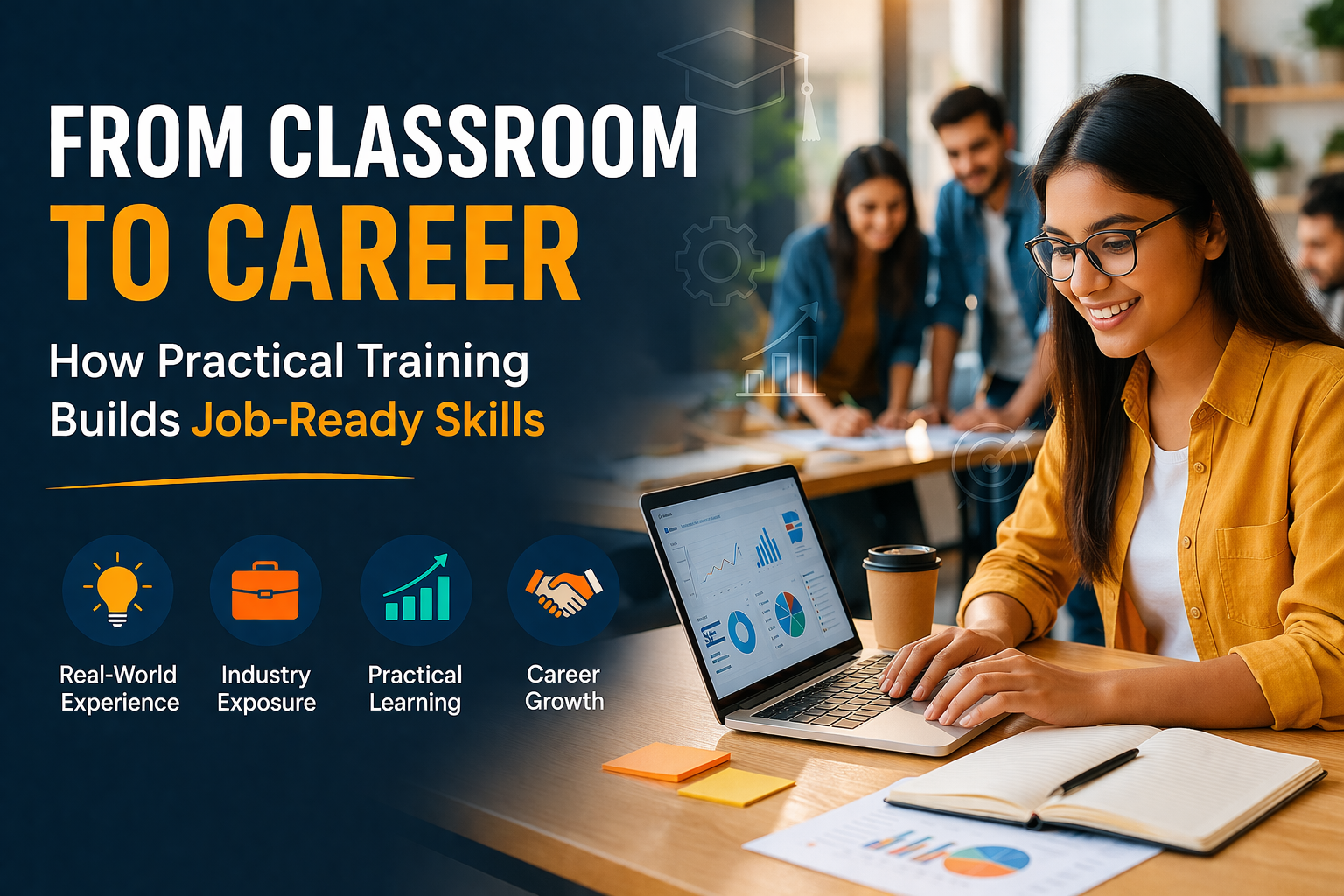
From Classroom to Career: How Practical Training Changes Everything
The world of education is changing rapidly. While academic degrees still hold value, employers today are looking for something more — real skills and practical experience.
Many students graduate with strong theoretical knowledge, but when they enter the job market, they often realize that the industry expects them to already understand how things work in real-world scenarios.
This gap between education and industry expectations is one of the biggest challenges students face today.
The Gap Between Theory and Real-World Skills
Traditional education systems focus heavily on concepts, textbooks, and exams. While these are important for building foundational knowledge, they often don’t fully prepare students for the practical challenges of a professional environment.
For example, a student studying digital marketing may learn about concepts such as SEO, social media marketing, and paid advertising in theory. But in reality, many students graduate without ever having the following:
Managed a real advertising campaign
Analyzed live website traffic
Created a complete marketing strategy
Worked with real clients or business objectives
When they enter the workforce, they are suddenly expected to perform tasks that they have never actually practiced before.
This is where the importance of practical training becomes clear.
Why Practical Learning Is More Powerful
Practical learning allows students to move beyond theory and experience how their knowledge applies in real situations.
When students work on real projects, they begin to understand the challenges professionals face daily. They learn how to analyze problems, test solutions, and adapt their strategies based on results.
For instance, running a real SEO campaign requires understanding search intent, analyzing competitors, optimizing content, and tracking performance using tools such as Google Analytics and Google Search Console.
These experiences build skills that cannot be learned through theory alone.
Building Confidence Through Real Experience
Another important benefit of practical training is confidence.
Students who have worked on real projects feel far more prepared when they step into job interviews or their first professional role. Instead of simply talking about what they studied, they can demonstrate what they have actually done.
They can confidently say that they have:
Worked on SEO optimization for real websites
Managed social media campaigns
Generated leads through paid advertising
Created marketing strategies that produced measurable results
This level of experience immediately makes a candidate more attractive to employers.
The Importance of Industry Exposure
One of the most effective ways to bridge the gap between education and employment is through industry exposure.
Internships, real-world projects, mentorship, and practical workshops allow students to see how businesses operate and what skills companies truly value.
Instead of learning only from textbooks, students gain insights from professionals who are actively working in the industry. This exposure helps them understand industry trends, expectations, and the practical tools used in daily work.
Creating Job-Ready Professionals
Education should not only focus on delivering knowledge—it should also prepare students for meaningful careers.
Institutes and training programs that emphasize hands-on learning, internships, and project-based training play a crucial role in building job-ready professionals.
When students graduate with both knowledge and experience, they enter the workforce with a clear advantage.
They don’t just understand concepts — they know how to apply them effectively.
The Future of Education
As industries continue to evolve, the demand for skilled professionals will only increase. Employers are no longer looking for candidates who only understand theory. They want individuals who can solve problems, adapt quickly, and deliver results.
This is why the future of education will increasingly focus on experience-based learning.
Students who invest time in gaining practical skills, working on real projects, and building strong portfolios will always stand out in a competitive job market.
Because in the end, success in a career doesn’t depend only on what you know —
It depends on what you can actually do with that knowledge.