AI vs Traditional Learning: What’s Better for Students in 2026?
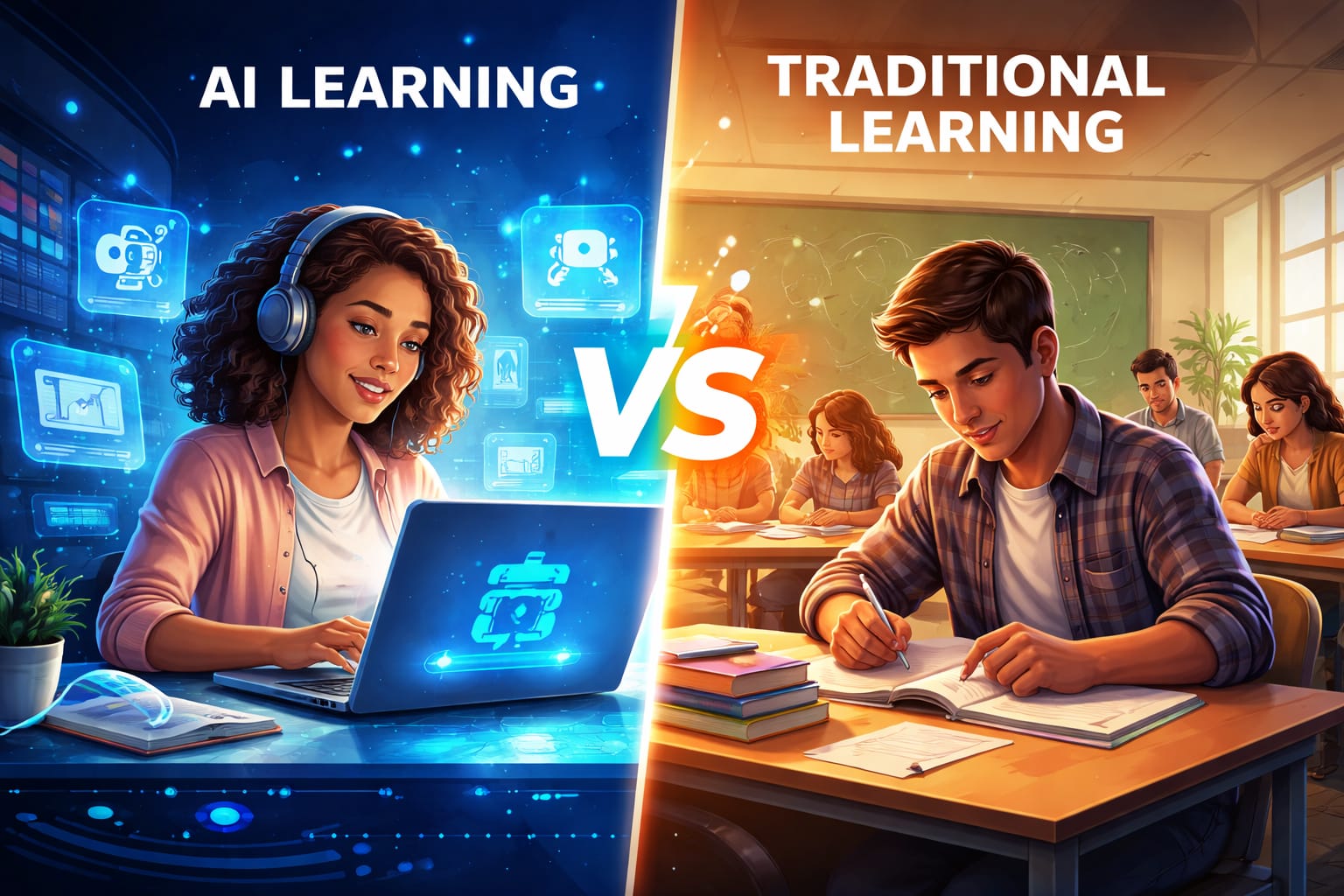
Introduction
Education has evolved rapidly over the last few years. With the rise of Artificial Intelligence (AI), students now have access to smart tools that can explain concepts, generate notes, solve coding problems, and even create presentations within seconds.
But does that mean AI is better than traditional learning? Or should students stick to conventional classroom methods?
Let’s explore both approaches and understand what works best in 2026.
📘 What is Traditional Learning?
Traditional learning refers to the conventional method of education that includes:
Classroom teaching
Textbooks and printed materials
Face-to-face interaction with teachers
Scheduled lectures and practical sessions
This method focuses on structured curriculum, discipline, and direct mentorship.
✅ Advantages of Traditional Learning
Personal interaction with teachers
Better classroom discussions
Hands-on practical experience
Stronger discipline and routine
❌ Limitations
Fixed pace of learning
Limited access to updated resources
Less personalization
🤖 What is AI-Based Learning?
AI-based learning uses intelligent tools to enhance the educational experience. Students can use AI platforms for:
Instant doubt solving
Personalized study plans
Assignment assistance
Research support
Coding help
Content creation
AI tools adapt to student needs and provide fast, customized responses.
✅ Advantages of AI Learning
24/7 availability
Personalized learning pace
Instant feedback
Access to global knowledge
Time-saving assistance
❌ Limitations
Risk of over-dependence
Less human interaction
Requires responsible usage
📊 AI vs Traditional Learning: Key Differences
Feature Traditional Learning AI-Based Learning
Learning Speed Fixed Flexible
Availability Scheduled 24/7
Personalization Limited High
Human Interaction Highly Limited
Instant Feedback: No/Yes
🎓 What’s Better for Students?
The truth is—it’s not about choosing one over the other.
The most effective learning approach in 2026 is a hybrid model, where students combine traditional classroom education with AI tools.
For example:
Attend lectures to understand core concepts
Use AI tools for revision and practice
Seek teacher guidance for clarity
Use AI for research and productivity
This balanced approach improves both knowledge and efficiency.
💡 Why Heuristic Academy Encourages Smart Learning
At Heuristic Academy, students are encouraged to learn core technical skills through structured training while also understanding how modern AI tools can enhance productivity.
AI should support learning — not replace effort.
🚀 Final Thoughts
AI is transforming education, but traditional learning still plays a crucial role in building foundational knowledge and critical thinking skills.
The future belongs to students who know how to combine both methods wisely.